Showing posts with label #ongoinglearning. Show all posts

Monday, 28 January 2019

Unpacking the matrix on LCS at HHS

Staff were presented with the matrix we are measuring ourselves against.

It was an interesting exercise to complete and I'm still not finished. From within it, I was able to generate two more goals to work on in our practice in visual arts, and it also gives me something to work with our staff in aligning practice.


What I really liked about this exercise is that it was a way of quietly starting off each learner's mindset with LCS again, it was non-confrontational and we could set our own pace. 

I would like to have spent more time with the solo stuff at the start, but this does give us the scope to go back to SOLO and LCS midterm perhaps. 


Thursday, 22 March 2018

PLD with John Parsons

Duty of care needs to be around yourself before you can look after anyone else.

Schools are left responsible for too much. We are not responsible for bad parenting. The parent that allows the 11 year old to have a facebook account, by suggesting/allowing they change their year of birth instantly is impacting that child’s sense of identity. The date of their birth. They need to own that. One little white lie tells that kid it is ok to lie if it is an online lie, creating a division between cyber and real world, when really there isn't one. You are ‘you’ online and in real life. When you start allowing, or even encouraging your tamariki to mess with that, you are in effect colluding to create that division.

There should be no need for cyber safety. It is safety. There should be no need for a ‘digital citizen’, you are just you. Trying to make the internet into an abstract world is confusing and unnecessary, it is a part of the world.

Questioning kids -  never ask questions that give the information - i.e. ‘was it alcohol?” -  “what was it?” is better.
Always report concerns to the ‘leads’ - kg and wk
Rule of optimism - don’t go with ‘but they are a nice person’ date and record every concern you ever have. A nice person can still be a predator/offender. What if you are right on your first instinct? Better to be wrong and err on the side of caution. Allowing the rule of optimism allows more harm to be done.

Don't make assumptions about what has happened to the child, just record.

Act without delay, to report. Encourage staff to trust gut feelings.
Make sure you know NAG 5 - safe physical and emotional environment for staff and students
What is our child protection policy? Find out and know it. Don’t leave it to be someone else's problem.

Four behaviours that are not a part of a teachers role:
  • Creating social network connections that are not driven by school and educational needs with students - keep your boundaries up. Imbalance of power. Which does not cease until they mature
  • Teachers who like to give gifts to students that are unknown by management. Even a pair of shoes. Everything must go through ‘the school’.
  • Teachers who instill themselves into the whole family and become the go to person for the whole family. Ego based and unsafe. Use the systems in place with the school. Don't take things on board without being a part of your own systems. EVERYTHING goes through the leads of the school. Bigger systems cannot be followed if you take these things out of the system by siloing yourself. You don't have the skillset and you will be drawn into the drama of the situation and will fail to meet the needs of the student
  • Teachers that hug students - confuses the boundaries for every other teacher with those students and it is not collegial. Its meeting the needs in us, not the needs of the students. Gotta be sensible about it, sometimes you cannot avoid a situation!

Don't let your kids use the school laptop. Don't let anyone at home use your laptop
Password protect your laptop when it is unattended even momentarily.
Purge your phone of images of students every two weeks, don't leave them on your personal device. Get them onto the school network where they belong. If you lose your device and it is found and/or hacked, it could give the community an unbalanced view of your professionalism which is not what you want.


Tuesday, 9 May 2017

Blogging; why, what, how (Sinek)

Made with Padlet


The above is the Hornby High staff feedback on why Blogger helps our students learn, followed by the presentation on how are students are blogging, and developing our next steps into 'what' we will be doing to not only teach them this way, but in fact just keep up with them.


Sunday, 30 April 2017

2017 Inquiry Update

Professional accountability in amongst self-perpetuated chaos. That might be a slight exaggeration. But, the decision to split up teachers whilst we had mixed the levels and disciplines of our classes is from an outsiders perspective, just confusing. And it leaves us teachers open to lose track of students and not spread attention equally and effectively.

The inquiry question is: Can teacher collaboration improve student achievement in senior art? 

The use of google sheets to track the students and keep ourselves in check. However, it is not us two yet collaborating. it effectively tracks our thoughts as we check through with each student and hopefully provides clear feedback for students. But, we are not yet collaborating in the true sense of the word.

I like how we are using it, as it has changed since we started with it.


There are some barriers to doing that effectively:

- Cindy is part time, though at 16 hours, her life should not revolve around being at school when I feel like talking about this!
- Four of her hours a week are on the other side of the school, jokingly referred to as Siberia (rebuild logistics), timeliness to classes following a Siberian lesson is costing us.
- Home time for both of us is precious and necessary due to our own circumstances (We don't live at school, nor will we be planning to take this up to solve the issue).
- After school time is stretched across a lot of demands - staff meetings, task forces, learning team meetings...
- I annoyingly use the Art room office as a Dean's office because there isn't space for me elsewhere while the rebuild is on.
- I get caught up with the pastoral side of my job more than I should if I'm balancing things fairly.
- We never will have a timetabled non-contact together... when I'm teaching Cindy is not and vice versa.

There are some solutions to these barriers also (and I am open to others too):

- Working online more effectively. We have done this before, timetabled ourselves to be online at the same time so we can discuss how something is working through 'chat'. but there will be other ways to maximise the actual collaboration that may not require online at the same time.
- Using lunch hours to discuss students progress more frequently... oh fun.
- Being careful to divide my time between my roles and sticking to those time separations. Setting it up in a more timetabled manner.

Breakdown of Scholarship Begins...

Scholarship resources for Hornby High School starting here.

Late last year, I overheard a conversation between two teachers about how we 'need' a separate class for scholarship potential students at year 13. According to the vocal one of the two, this class would be about 5 students. The school's Senior Leadership Team needed to prioritise it if they really care about students succeeding here and yes that would mean academic casualties, like the loss of some subjects or pass rates to achieve it. It was seen by one of the two as the only feasible way to break the spell and get those elusive scholarship grades. The other stayed very quiet.

This idea that you have to be in the right class is no different to having to be in the right school, live in the right area, come from the right two-parent family with the right moderate to good income, driving the right car... Nothing of it sits well with me. I rage inside at the thought of it. I want Cinderella to go to the ball, Dorothy to find home and Snow white and Sleeping Beauty to get themselves up out of bed.

We already had our one student sitting her scholarship and we knew she was well on track for the excellence required to be able to be considered for it. Not once did I consider that anyone else had, or should have to miss out on their place in the class because of her. Or, in order for her to get there that they should go. But that was definitely my moment of 'we are going to make this real here'.

So we are paving that yellow brick road, making it real and breaking the spell. The significant things I have found are that the way it is assessed is not terribly similar to the boards or the other standards.

There are three categories that they assess by and the students can achieve three different grades of not achieved. Each category is marked out of 8. 24 marks in total are attainable. It's complexity can be very daunting when resilience is a key component requiring significant scaffolding. The link above is the document for assessment. It is posted on our google site and students are able to find it and comment on it if they wish. I would be encouraging students to use this to seek clarification if they need it.

The resources online are limited in comparison to other standards. Not many schools like sharing! Though one has been very generous in his Teaching Inquiry on scholarship and his resourcing. Tim Thatcher at it has certainly made it all very much clearer in how this could be handled within an average class. I see from his inquiry, that total integration within a classroom is preferable to having separate classes or sessions outside of class devoted to scholarship. That the uptake for those dwindled as the year carried on.

What I have achieved so far:
- We have one certainty for scholarship in both Design and Paint (willingness that is, though exceptional talent too) for 2017
- There are students in our current 2018 year 13 cohort who need to be considering this exam also, but there are also a lot of pressures on high school students. How far do we go in preparing students for this? Or is that no better than the 'right' class, right school scenario?
- Breaking down scholarship to be less complex and visible to the students on the main google site for Art at HHS.

Still working on:
- Having some kind of calendar for the 8 pages (which I would want to say were 12 so that students could edit them down to the best 8)
- Accessing a range of schools resources, including sharing what I have done without feeling like a poor cousin. Walk the talk. Sigh.
- Using Art History standards to better allow for that research component. It is really successful in level one so far this year... I have an unpublished blog post about that come to think of it...
- Using Classroom, Hapara, blogging or something to work the critiques through with the individuals as they go along for the scholarship pages. Will discuss with colleagues.
- Making a 24 hour day into a 30 hour one.


Wednesday, 1 March 2017

2017 Inquiry


Our Inquiry for Visual Arts this year is a joint one, focussing on how best to spread the load of specialty skills across as many senior students as possible.

Can Teacher Collaboration Improve Student Achievement in Senior Art Classes?

Our progress so far has been to set up the google sheets to track at least the first 6 weeks of each class in the senior school for Art. I would expect these to develop and grow based on how we use them.

There is the intention that these are used to make sure no student is left behind in being given feedback and kept up to speed.

We have also organised to split up the line 3 and 4 classes and share the teaching across those lines. We do have differing styles and expectations so it may take a little time to adjust to this. however, if students are truly working to their own goals and are there for the right reasons, this should come together.

At this point in time we have one over subscribed class of 37, one of 33, one of 13 and one of 22. Because we chose to mix our levels, there was a lack of communication between the three levels in general about numbers, so this is an issue that needs clarifying.

By the end of 2017, I want to be able to say we gave every senior student the best possible chance with teacher expertise available to direct their own learning. I want every student to be able to direct their own learning, rather than lean on the teacher or dismiss their own chances because the right teacher is not there.


Wednesday, 12 October 2016

ULEARN 2016 - 5 - 7 October; What I Gained

ULEARN is pretty massive. I had never been, and only had the GAFE summit held in Christchurch to compare it to. The reason I got to go was because of Spark - MIT 2016. Again thanks so much for that opportunity.

It was substantially bigger than GAFE (I think) and they feed you very, very well. 1800 teachers attended this year and my first observation was of observing the local College students obligingly and efficiently organise the registrations of those 1800 teachers who are a) not good at following basic instructions and b) are crammed into a seemingly small foyer, with coffee nearby, not able to get to it til the registration was done at 8 in the morning...The students were awesome and moving through the teachers more quickly than the front desk. 

My key takeaways would be too many for one post. I am distilling it down to my top 10

From Andrew Ford of Sebel who presented a non-sales pitched presentation on how to effectively manage in an ILE/MLE space, using research and design thinking:


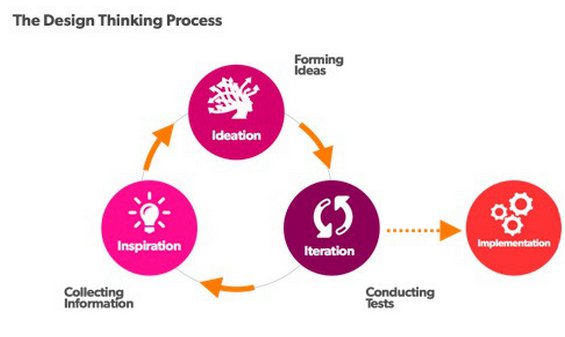
1) IDEO - This really clearly linked up with Sineck's golden circles so it was easy for me to grasp and made sense.

2) That our whole 'scary' concept of ILE actually comes from the work place, it is already quite well tested with a heap of research within places like architectural offices, design and advertising, Google, Yahoo, Spark, Vodafone... we are just taking those ideas and applying them to education, which is about effective rather than efficient education. Most jobs rely on collaborative process, education needs to reflect that more.

From Professor Michael Fullan who is a bit amazing, on everything because he is amazing
3) "Transformation always means disruptive and that is important. You need to exploit the disruption. Be a disruptor."

4) The New reality - social media is ubiquitous, it weaken hierarchies, which opens up lateral solutions, distribution and concentrated connection is the new power. E.g. our COL's are a distribution of power and if they ae working well, it is a new concentration of power. The young are the most connected and the least committed to the status quo. Students are the agents of change when you set it up right cultivate it and leverage it.

5) Discursive practice makes all the difference. Talking the walk into action, talking yourself into clarity with others around to support you - collaborative, creative, encourages critical thinking, develops your character, you have to hear and accept others views, develops citizenship - how you relate back to opposing and supporting views.

From Hekia Parata who is a very gifted presenter and had 10 minutes:
6) First be powerful leaders in your own lives, the opportunity to contribute is much more real and powerful.

From Hammersley Street school in Nelson - collaborative learning
7) Scaffolding has taken the place of try, fail, learn, try, fail, learn, fly

8)The definition of a well organised teacher needs a major shift in a lot of schools. Endless scaffolding and endlessly planned lessons, and structures in a class ultimately become a barrier to authentic learning if there are ever any challenges, student agency, choice or voice

From Rosemary Hipkins - making meaning across learning areas
9) I see, I think, I wonder - brilliant starter exercise to help move professionals into more of a growth mindset about project based learning. It was cool!

From Haeata Community Campus Senior Leadership Team on transforming leaership and school systems
10) Thats the way we've always done it #ttwwadi
Ncea and ero become excuses not to move forward. If its not broke… but ask why you cant do that because of NCEA, question it and find out why. Interrogate the why all the time.

Tuesday, 6 September 2016

Genius Hour

Collaboration in PLD at work. Shared google doc with notes a few staff took simultaneously during our PD with Caroline From Christ's College on how she runs Genius Hour. Awesome session;
Contributions from:
Joanne Clark
Ben Carter
Sarah Richardson
Rowena Clemence


Friday, 19 August 2016

Trouble Shooting

7BK - my main class for trialling SPARK - MIT initiatives are just lovely. They tolerate and buy into me trying new things out on a very regular basis. AND they tell me they love Art. What more can I hope for :-)

Going week to week, sending out mass copies of google drawings to be completed by the class is messy and confusing. Particularly when we are enrolling new students all the time who are not necessarily added to your Hapara class lists...

I lost my phone again. And my keys (not new). And my head doing this. I had messed around in workspace and then decided not to use it. Now it can be made public and now that I am steadily confusing myself with what is sent and what is not, I have come to the realisation, it is the cleanest and most effective way to get their literacy work out to the class.

Their Hapara drive looked like this:

 Which was my fault....

We were all confused and only got about 20 minutes of practical art work done in a lesson...that is not fun. I persisted with this for a while before I decided I was making my life worse.


WORKSPACE - I think has saved my life


How tidy is this? I can set up the do nows as 'evidence' it is public and I am about to link it to my site so that they can enter through there too.

Life is better.

Sunday, 7 August 2016

"Write That Essay" PLD day notes

Our focus is writing and based on the Woolf Fisher data we received on Wednesday, That is pretty much what it should be.


There were a lot of useful tips and tricks that we can implement starting Monday, and we will. Blog posts are about to change for our senior students.

Wednesday, 25 May 2016

SPARK - MIT trial

7 Bk's Class blog.

This is a class I have hardly seen and they cannot keep up with the programme we had initially planned on because of that. Interruptions will continue unfortunately, so I am going to work with them as a trial class.

I will post up the results of this after Thursday

Sunday, 21 February 2016

MIT Manaiakalani Innovative Teacher's Scholarship 2016

This is something I applied for in 2015 as something to address in imbalance that exists in getting talented, priority learner Art students through into NCEA with as much confidence in the written/analytical strands of the curriculum, as well as handling the visual/technique based strands.

I want to create an online exemplar forum of student work that is live and demonstrates the curriculum at the junior levels as low mid and high. we are moving to reporting to our community along these lines, as a lot of schools already do, and even using NCEA terminology of Achieved, Merit and Excellence within each level. Years' 9 and 10 are my target group at the moment.

Writing and literacy is a major focus for our school and this inquiry I have planned addresses that focus in Art as well as working at making digital learning opportunities ubiquitous and moving critique and self-assessment into the modification and redefinition phase of SAMR (Substitution, Augmentation, Modification, Redefinition)

Rough Breakdown Of the Visual Arts Curriculum:

PK - Practical knowledge - at ALL curriculum levels this is technique/technical based learning in Art
DI - Developing ideas - likewise all levels, it is about formulating ideas to make your own art works happen and showing thought in doing so.
UC - Understanding Context - that art works are viewed and/or made
CI - Communicating and interpreting about your own and other's art works

The top two do in fact require a very good level of literacy at all levels to generally excel at them, however, you can to a certain extent do really well without this, as thinking can be so very visual too. But I feel it hinders not having that literacy.

The bottom two strands are most easily assessable (but I wonder if that means not necessarily understandable) with good literacy.

The order I have listed these strands is how they were initially released when the Visual Arts curriculum was released in the year 2000. However, when it was revised in 2008, the order was changed to have UC, PK, DI and CI as the order. While that may seem like not terribly important, it was a way of trying to get teachers to focus on making sure students understood the context of what they were studying. Hence making the emphasis a little more important that the students have higher levels of literacy, in order to truly manage the higher levels of the curriculum (NCEA).

Each year, there are students in our classes who are highly skilled visually, but are sitting much lower than you would want, with literacy. It is at every level. There are students who despite this, have been known at achieve University Entrance level in their chosen field of Art and I could rattle off a few dozen names from memory (not doing that on the public web though!). Equally there are just as many who don't make that level and it often appears, or can be explained by literacy levels.

There has been a clearer distinction for me lately - students who have participated in critique, even with low literacy levels, manage to eventually get to the level required, even though their language skills were less evident. Though this is often at the expense of the teacher's time and other teaching opportunities. More frequently, we have good examples of student learning and end achievement in the senior levels from students who not only participated in the group critiques, but also blogged about their work, in their own language, were more likely to succeed. I am not giving numbers here. My numbers are too low to use as statistics with any real integrity. I had 1 photography student at level 3 in 2015. So that is 100% pass rate. Really, that is not a good way to report statistics. My 3 painters gave me stats of 66% merit endorsement, 33% achieved grades and in total, obviously 100% pass rate. So clearly, I am amazing. Or the numbers are just too low to read as statistics. Those stats also don't show the students I lose leading up to level 3, and those the school itself loses before I could even possibly get them into a level 3 class. Again, lies and statistics.

That throws up the other issue that I am using this to also track and hopefully positively impact retention into NCEA courses here at Hornby High School as well as provide a real resource that other teachers can key into, students can access ubiquitously and use at their own pace to measure, target and improve their own learning. They will also be able to take their own work and share it as a valid, real, teaching and learning resource.


Monday, 21 September 2015

Practice Makes Perfect.

At the centre of our school plan is Actively Involved Learners. 


In my teaching Inquiry, I have been looking at how critique and collaboration affects resilience and outcomes of student work and creating agentic learners in creating those scenes described by our Principal of the teacher skipping out the gate at the end of the day, with the students crawling, exhausted, as opposed to the other way around. I have touched on resilience a few times, as a key factor as it is one of our school vlaues and I keep wondering how we measure it; the timed drawings in year 11 and Manaakitanga in year 12 and 13 for instance have been active examples of me trying to figure this out. Achievement is going to come about as a result of commitment and resilience in my opinion. Respect is almost an aside, though necessary, obviously. In researching resilience as a topic to explicitly teach my students, in order to improve their outcomes, I go back to this each time; Carol Dweck wrote a theory about how your mindset affects your success. We have been looking at this as a larger part of our school professional learning:


Being able to pick yourself up and have another go is success not failure. Un-resilient students see falling in the first place as failing, so don’t even try and pick themselves back up. It’s too late. Picking yourself back up is resilient behaviour. The default setting as 'hard work and effort', make this real. People with a growth mindset are already doing this. People with a fixed mindset are hiding and avoiding having to, looking for the things that they are so ‘talented’ at, that they don’t have to work hard at, so that they don't have to risk failure.
How does it come about?
According to Dweck, it is totally able to be taught. Developmental stages do not seem to mean anything in teaching ourselves to become growth mindset kinds of people.

growth mindset summary.png
This slide is from Carol Dweck’s own youtube presentation in which she elaborates further, citing a Native American school on a reservation that was the bottom of the equivalent to league tables for their state. They were pulled back up to the top using her theories of how to praise, when to praise and how to speak about the power of “yet”.

This is slightly left-field but I was watching Sesame Street with my daughter last weekend and this was on; Sesame Street is one of those mainstays of Children's TV that is well researched and cleverly sequenced together, being the first childrens' programme to systematically use research and it's own 'curriculum ' in developing it's content (Gerald S. Lesser. Children and Television: Lessons from Sesame Street. New York: Vintage Books. p. xv. ISBN 0-394-71448-2.). And look at that, this is written with direct reference to Dweck's research on "YET". It is a fantastic example of explicitly capturing children's attention with a message that teaches a growth mindset. She was singing along after less than a minute. 


There are larger social factors that are positively affected by teaching this theory to communities; aggressive reactions are lowered, teaching a growth mindset about personal qualities lowers a person's chances of reacting violently. Bullying is lowered. Dweck calls it a basic human right for children to exist in communities that allow them to develop growth mindsets. 

It seems to me that teaching agency and resilience are interlinked concepts. One doesn't easily happen without the other. Teaching students to be their own leader of change is reliant on understanding resilience and having a growth mindset. 

My next focusing questions:
  • How does this apply to Year 11 critiques and removing some, or in fact quite a lot of the scaffolding/whole-class teaching? The speed drawing methods we used earlier in the year?
  • How does that apply to Manaakitanga? What data do I have?
  • What are my next steps for Year 11? What data am I collecting?
  • What do I do differently in Year 12 regarding the Manaakitanga?
  • Is it worth making visual cues on the growth mindset for the classroom and explicitly referring to it in each class? How would I measure the impact of this?

Sunday, 3 May 2015

Assemblage - Manaakitanga; Collaborative Consideration, Collective Control.


These photos are the result of students working on the same drawing at different times and adding their own ideas to them. We had five proposals as a base. Each of the three classes worked on these equally. Time limits in class were set and students had to really think about how they perceived shelter from a spiritual, emotional, as well as physical sense.

 
Students voted for their favourite drawing and had to justify why they made that choice and consider how they would eventually make the structure. The first and largest image above is their choice - number 4. It wasn't mine and I struggled with not putting  a case forward for one I liked personally! That would have undermined the intention of it being their collaboration. It was their decision and they felt that 4 reflected their understanding and intention in discussing shelter. The difficult aspect of this is that this is not a three-dimensional drawing. It is a flat design, with texture, space and form that needs to be made three-dimensionally. In studying Anthony Caro, there is a realisation that he is not just a sculptor, but he is also a proficient abstract painter. And in fact, he is often really just painting with metal and space. Unlike Aycock, the student's other Artist model to consider in assemblage practice, he does not however, plan anything, or draw anything of his sculpted pieces. He only makes from the materials he has and the idea he has, often based on lengthy discussion and debate with his Artist wife. I have not got her name on hand. 

From there students have been working on creating it our assemblage. The first part of this, was how do we make a floor happen?  Anisha suggested her dad may be able to give us some old wooden palettes. Framing up a floor with 2 x 4, would have been a long, technical process and would have used a lot more material than we had budgeted for. So we asked Anisha if he would let us have some and the next day he delivered us 6 palettes, that our photography class nailed together as a floor. I was a little stunned when he drove up with these. Brilliant community here at Hornby. He also provided some nails from an old nail gun, but when you use those without a nail gun, someone has to sit there and break the wire that bonds them all together like machine-gun bullets... sore, sore fingers.


  Nikita and Bevan to the left, and additionally Shavaughnm Mich and Brianna below in the shortest video ever below (I  need a new phone...)


  The painters who werent too shy to be photographed; Niomi (Photographer), Estelle, Ana and    Quaid.

So who did what; The painting class took on the making of the uprights for the frame. The designers and then the painters took it on from there. Due to time constrictions across term one, we have struggled to finish what we have started, but the plans seem to be progressing as to how we manage the roof. Three v-shapes that likely have a proper building name, have been made by students with left over bits from a children's swing, one made solely by Danica, which was pretty impressive. There has not been one of our current students, who has not involved themselves in some way. We do not have real building knowledge here, we are in fact making what we have work, to be what we need visually. Mr Rees and Mr Rozka have been really helpful when we come over to them asking for all sorts of their gear and advice on how to do things that we had not even considered.

Our plan from here is to glue and drill screws in for the roof, as this seems sturdier and that is what we need as we go upwards. We have worked hard to make plaited flax ropes for bindings around corners and tying things on or down as we need to, but we need a lot more. Matua Mike Murray was brilliant in showing our design class how to carefully and respectfully cut the flax for this, with a Karakia and only the grandparent leaves. The cross feature and the wire features are still needed. Sheets for walls seems to be popular as we can use a staple gun to get them up and they will provide good imagery to draw, paint and photograph for folios, which is half the purpose of this structure; that it becomes their visual grounding, starting point and muse for the rest of the year. So, we have to re-set deadlines as we lost more class time than we initially anticipated and certain tasks too longer than we wanted as well.


  Miss Botherway, Mrs Cairns, Logan                                                               and Jacob

Additonally, Teresa, Shavaughn and Anisha pictured here with the boys (Design class).

There are numbers of incidents of working together and being collaborative, and it is often on the spur of the moment that it happens. That sense of helping each other out has been increasing and is happening in a natural way often. However, there are times when the teacher still has to get things started before it happens. I wonder if this is a confidence thing? But still not happening is the students owning it and working on it during their own time. There have been some small incidents of it happening with the small photography class, but it was short lived, with interruptions in learning slowing this down. So there is not really the sense of collective control that we wanted. Time and personalities across three classes have disrupted this. Students are working on how they make this structure meaningful in their folio work for the remainder of the year and already there are the calls to not start certain aspects of their personal practical work until 'we finish it'.

In starting this assemblage standard, to cover Manaakitanga as one of our cultural conventions, I find that other aspects of what has now been defined as our 6 successful teacher criteria (but for me was initially relative to how the Treaty of Waitangi is, or is not validated in teaching inquiry) are necessary in making this a success. Kotahitanga is most specifically what I am considering now. I have already begun using it as a learning outcome for term two of the year 10 programme, now I see that it is a natural progression for this programme also - creating unity, while celebrating individuality - this is my understanding of Kotahitanga based on discussions with our HOD Te Reo Māori, Matua Corey Kamariera. I need to think this out much further, as to how to apply it here meaningfully. I need to think about a lot of things further, as the two main concepts in studying Caro and Aycock need to be something students draw from during the course of their work this year too. I'm making a list.

In terms of completion of this assemblage, we have revised our expectations and are working towards completion, but with student collective control, not teacher-run timetabling and deadlining. Cindy and I are very proud of what our classes have achieved so far, but well aware of the work required still...

Monday, 19 January 2015

Start of 2015

We need a selfie stick! Today we are working on the best mocktail recipes, and blogs and google sites, in the country heat of Swannanoa, locked inside away from rather large blowflies, dobermanns and the nor'wester when it winds up every now and then.

Intentions for today are for the 'culture vultures' to get more comfortable with each other's blogs, for us to hoepfully facilitate each other's learning on blogs and to then work on. All without vodka...


still working...

So we intended this day to be about working on our blogs and google sites. This was a collaboration of colleagues who all had similar goals. We have succeeded in further up-skilling ourselves in blogger, albeit with frustrations with the technology, and we have nicknamed ourselves the 'culture vultures'. Rhymes well, but I am not sure about the meaning we are mean't to draw from it. Katie maintains it is 'sexy'. ? Don't they eat dead things? All of us are set up for continuing on with this process of gathering supporting information around the registered teachers criteria within our own practice, we have set up our own mini learning community that covers a number of the humanities within the school, and could easily and willingly cater for a more diverse range of representation, though we are just a group of colleagues who are also friends, and we are responding and supporting our own learning needs locally.

We will organise another learning time for google sites following this.