Showing posts with label #ideaforinquiry. Show all posts

Monday, 6 May 2019

PLG TAI reflection on leadership dimension 4 and how I would use it.

This year one of my roles is the leadership of a professional learning group across the Uru Mānuka cluster. The purpose is to generate enough evidence following a theme for each group, for teachers to meet the PTC's.

One of our challenges is to interweave the guiding pedagogy of the cluster throughout the process, even though each school will have its own documentation methods for TAI - that of Learn Create Share. 

I do believe that many staff are still not willing to spend enough time unpacking what LCS means. It's too easy to go on the Oxford dictionary definitions of those words without actually buying into the work and research behind it. While that is a separate frustrating issue, little steps will lead to more meaningful evolution of ideas eventually. I found this particular article which clarified Learn as to know, create as to act, and share as to value, and specifically identified these as 21st-century educational skills. My argument is that staff should value the pedagogy not the words. Maybe we just need to see it in different words, with research behind it from other sources such as this.

Learn
Focusing Inquiry

“What is important (and therefore worth spending time on) given where my students are at?”

As PLG leaders we are working on leadership dimension 4 from the Best Evidence Synthesis (BES)


In identifying two elements of leadership dimension 4 (I haven't questioned deeply why this is the one we are focussing on yet), I have struggled which I focus on. I'm erring towards three and four. In this TAI, the 'students' are my colleagues, the outcomes are their own learnings from this process. The most gain for them is going to be making sure I have the knowledge of effective professional development from a researched basis and ensuring collective responsibility and accountability and how to foster it. Acting as an instructional leader is a focus, but with two of us as leaders for this group, 'we got this'. Use of data is actually just a pain when you are working across schools and there is no time allowance for this 'job'. It's a good way of making my own TAI unachievable. Good individual processes should mean data collection happens naturally anyway, and if it's causing the TAI's to fail, then I guess I revisit this hypothesis. There are 8 participants in the group from 3 different schools and only one meeting per term. In focussing my inquiry, effective professional development and collective responsibility/accountability are probably of the most significance for our learners (colleagues). This is my activation of the process, my Learn, and what I know.


Thursday, 20 July 2017

New PTC's in NZ Teaching; how I see the relationship to TAI and Appraisal


Simplified version of our RTC's now called PTC's. The language seems more modern and there is a clear, concise e-learning version of how they could be applied here too. The first thing I thought was 'great, my labels all need to be remade on my blog... thanks EDUCANZ', more work on top of TAI for appraisal, actually teaching my students, the leadership and pastoral roles I already hold and the new staff member we will have in the Art department next week (yay :-) ). But in reading them, the language is better, the concepts are modernised and there is the e-learning study that CORE ED have done here too. 

What I like:

  • The overarching statements cover everything nicely and the criteria and indicators are nice clear guides:


Overarching statements

  1. Teachers play a critical role in enabling the educational achievement of all ākonga/ learners 1.
  2. The Treaty of Waitangi extends equal status and rights to Māori and Pākehā. This places a particular responsibility on all teachers in Aotearoa New Zealand to promote equitable learning outcomes.
  3. In an increasingly multi-cultural Aotearoa New Zealand, teachers need to be aware of and respect the languages, heritages and cultures of all ākonga.
  4. In Aotearoa New Zealand, the Code of Ethics / Ngā Tikanga Matatika commits certificated teachers to the highest standards of professional service in promoting the learning of those they teach.

  • You can approach it from a place  like this blog, where you detail the why, how and what of what you are doing and detail that with evidence, labelling statements and/or criteria and/or indicators appropriately

What I don't like about it:

  • Even though it says these are interdependent and overlapping, you could still turn it into a checklist for teachers to tick off. Defeating the purpose of them being interdependent and overlapping. 
  • I don't see how a teacher can construct one single TAI that is used for appraisal purposes as well as meeting these all at once and I think it is worth debating whether we should be trying to do this.

What I find interesting:

  • I'm just not convinced you need to apply one massive big TAI to the whole year to meet these, nor the old ones for that matter, and I recently had a discussion with a colleague about whether TAI should be used to demonstrate these over the course of a year long focus inquiry, or whether it should be a process that happens naturally and repeatedly because of your continual reflection on your own practise. I cannot remember who the colleague was or how the conversation came about, but my brain kept reverting back to 'but this is the direction the ministry and our school is wanting us to develop - TAI integrating with PTC's to test appraisal'. That is such a weak argument. It should not be why we do anything, because the ministry says so... (don't sack me).
So could I say no I'm not doing A TAI, to prove I meet these overarching statements, any of the criteria or key indicators, because I could probably prove every single one if I continue on like I am; posting up evidence of mini TAI's happening naturally, within the course of my teaching and leadership roles, and clearly identifying how they answer these a bit at a time. Could anyone at my school say 'you are doing that wrong, you are not competent'? Could I even be accused of failing to meet the first criterion? I wonder if your whole appraisal is based on a major TAI as we are being directed towards, we cannot manage this lofty goal?

The last time I applied for my registration, I sent the URL's for my teaching site and for this blog. All I was asked for that was extra, was a birth certificate from this millenium (why do you need to keep providing a birth certificate every three years?). Cool, much less work than jumping fences with unknown heights through the TAI system of appraisal I was initially involved in creating at my school (and I enjoyed the academic work of doing it too) .

In any case, my own TAI that I started 2017 is no longer relevant. However, several off-shoots of the TAI I started with SPARK - MIT have developed since then, that easily meet the PTC's.  The whole 'thing' has become so much bigger, but also so many more that are smaller, easier to document, more relevant to the on-ground job at hand and less 'constructed' to fit other peoples boxes, that I think we ought to be rethinking how we 'test' appraisal. One major TAI that has to be forced along and ignores the fact that TAI exists all over the place in all sorts of ways in your practice doesn't do it. But, it becomes a monstrosity or it becomes lip service. In my opinion. Having being trying to push myself through this exact concept for 2 years now. 

So for however long I can get away with it, I will not be doing a major TAI. That is my TAI. Can I document my natural processes as a teacher, leader and learner through the lens of TAI, as it happens, remain competent and still be steadily working towards our school vision of Learn, Create, Share; Actively involved learners? I would happily challenge any other professional or academic to prove that I do my students, colleagues and community a disservice by doing so.  I am also happy to be appraised separately. Any one can come in and see my teaching, go through our planning, collaboration, offer advice, make up check lists that address an appraisal of sorts. I just don't want us to be calling it a day after one major TAI for the year being constructed and isolated to do that for us. 


Monday, 1 August 2016

Language Accessibility Again

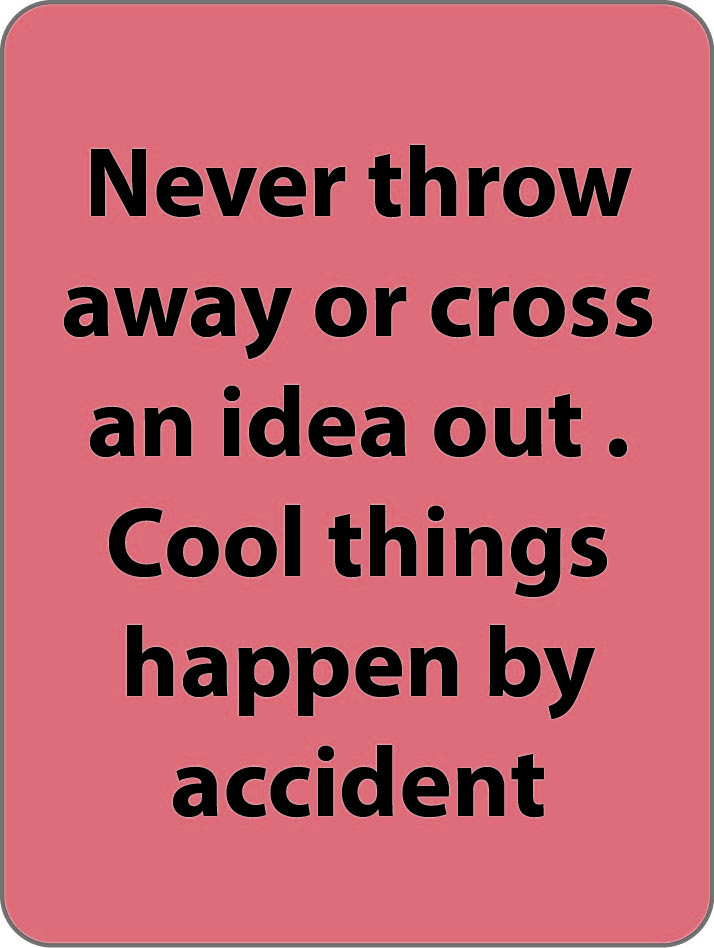
DI***********.jpgWhat worked DI.jpgUse artist model DI.jpgAnnotations DI.jpgDI************.jpgDI**************.jpgMeaning DI.jpgBeauty in your mistakes DI.jpgDI*******************.jpgDI*****************.jpg

From this,


to this...


This does work, but, man, the language is hard in the CI and UC strands for them. A lot of repetition is needed. And some definitions still need tweaking.

Not all of the words are straight from the curriculum statements. In each strand I have included words I teach to, and have taught to. For example 'Tache' in PK.

Next steps; 
- Starting at a level below what I think they are
- Building up a cache of language google drawings that they 'get' quickly and can start to show some fluency in,
- Applying the words to their own and others pieces of Art pieces and building a communal bank.
- Making this accessible to other teachers to start using and add to.
- Measuring student's performance from starting to finishing and within curriculum work over the year. Using self-assessment as well as teacher based assessment.
- How does this link into SOLO and how I am re-structuring units of work around Learn, Create, Share.

Friday, 29 July 2016

Google slide for developing a unit of work with the students


Working on systemising how we break down the units so that the students can relate it back to their analysis on google drawings of each strand based on examples of work.

The idea being that we create and discuss the unit and it is added to as students experiences and understanding unravels in that first lesson. Will be seeing how it goes this coming week.

Wednesday, 11 May 2016

Student self assessment - Qualitative Data gathering using google sheets

Spark - MIT have given me the opportunity to explore and figure out a way of developing a way with my students to unpack the curriculum in Visual Arts for themselves. In order to do this successfully, (shoutout Tania Coutts for help with this) I need them to be able to not only self assess, which they do anyway, but to be public and brave about it.

Google sheets is essentially 'live'. 'Protected sheets and ranges' means that I can have multiple editors and lock them down to only what I want them to be able to edit. Qualitative data is significant in understanding how students are managing that top end of the curriculum.

This is where we are at with all of our junior classes. Because it is all of them (13 classes in all) it is a bit of a Himalayan trek to get it all done.


This is a screen shot from one class who are incomplete so far.
Each student can only access their own row. It is colour coded and is my marking schedule anyway for the class, with alterations made to the language, as they tell me some of my criteria were too confusing... They can see what each other are entering right then and there and this can be good or bad. How I manage the culture, as the teacher running the task at the time, is important here. It does take clear explanation first as well.

We are working on refining it with each class and there is differing feedback from each class. So it has to be developed with the class, not for the school.

Sunday, 21 February 2016

MIT Manaiakalani Innovative Teacher's Scholarship 2016

This is something I applied for in 2015 as something to address in imbalance that exists in getting talented, priority learner Art students through into NCEA with as much confidence in the written/analytical strands of the curriculum, as well as handling the visual/technique based strands.

I want to create an online exemplar forum of student work that is live and demonstrates the curriculum at the junior levels as low mid and high. we are moving to reporting to our community along these lines, as a lot of schools already do, and even using NCEA terminology of Achieved, Merit and Excellence within each level. Years' 9 and 10 are my target group at the moment.

Writing and literacy is a major focus for our school and this inquiry I have planned addresses that focus in Art as well as working at making digital learning opportunities ubiquitous and moving critique and self-assessment into the modification and redefinition phase of SAMR (Substitution, Augmentation, Modification, Redefinition)

Rough Breakdown Of the Visual Arts Curriculum:

PK - Practical knowledge - at ALL curriculum levels this is technique/technical based learning in Art
DI - Developing ideas - likewise all levels, it is about formulating ideas to make your own art works happen and showing thought in doing so.
UC - Understanding Context - that art works are viewed and/or made
CI - Communicating and interpreting about your own and other's art works

The top two do in fact require a very good level of literacy at all levels to generally excel at them, however, you can to a certain extent do really well without this, as thinking can be so very visual too. But I feel it hinders not having that literacy.

The bottom two strands are most easily assessable (but I wonder if that means not necessarily understandable) with good literacy.

The order I have listed these strands is how they were initially released when the Visual Arts curriculum was released in the year 2000. However, when it was revised in 2008, the order was changed to have UC, PK, DI and CI as the order. While that may seem like not terribly important, it was a way of trying to get teachers to focus on making sure students understood the context of what they were studying. Hence making the emphasis a little more important that the students have higher levels of literacy, in order to truly manage the higher levels of the curriculum (NCEA).

Each year, there are students in our classes who are highly skilled visually, but are sitting much lower than you would want, with literacy. It is at every level. There are students who despite this, have been known at achieve University Entrance level in their chosen field of Art and I could rattle off a few dozen names from memory (not doing that on the public web though!). Equally there are just as many who don't make that level and it often appears, or can be explained by literacy levels.

There has been a clearer distinction for me lately - students who have participated in critique, even with low literacy levels, manage to eventually get to the level required, even though their language skills were less evident. Though this is often at the expense of the teacher's time and other teaching opportunities. More frequently, we have good examples of student learning and end achievement in the senior levels from students who not only participated in the group critiques, but also blogged about their work, in their own language, were more likely to succeed. I am not giving numbers here. My numbers are too low to use as statistics with any real integrity. I had 1 photography student at level 3 in 2015. So that is 100% pass rate. Really, that is not a good way to report statistics. My 3 painters gave me stats of 66% merit endorsement, 33% achieved grades and in total, obviously 100% pass rate. So clearly, I am amazing. Or the numbers are just too low to read as statistics. Those stats also don't show the students I lose leading up to level 3, and those the school itself loses before I could even possibly get them into a level 3 class. Again, lies and statistics.

That throws up the other issue that I am using this to also track and hopefully positively impact retention into NCEA courses here at Hornby High School as well as provide a real resource that other teachers can key into, students can access ubiquitously and use at their own pace to measure, target and improve their own learning. They will also be able to take their own work and share it as a valid, real, teaching and learning resource.


Monday, 21 September 2015

Practice Makes Perfect.

At the centre of our school plan is Actively Involved Learners. 


In my teaching Inquiry, I have been looking at how critique and collaboration affects resilience and outcomes of student work and creating agentic learners in creating those scenes described by our Principal of the teacher skipping out the gate at the end of the day, with the students crawling, exhausted, as opposed to the other way around. I have touched on resilience a few times, as a key factor as it is one of our school vlaues and I keep wondering how we measure it; the timed drawings in year 11 and Manaakitanga in year 12 and 13 for instance have been active examples of me trying to figure this out. Achievement is going to come about as a result of commitment and resilience in my opinion. Respect is almost an aside, though necessary, obviously. In researching resilience as a topic to explicitly teach my students, in order to improve their outcomes, I go back to this each time; Carol Dweck wrote a theory about how your mindset affects your success. We have been looking at this as a larger part of our school professional learning:


Being able to pick yourself up and have another go is success not failure. Un-resilient students see falling in the first place as failing, so don’t even try and pick themselves back up. It’s too late. Picking yourself back up is resilient behaviour. The default setting as 'hard work and effort', make this real. People with a growth mindset are already doing this. People with a fixed mindset are hiding and avoiding having to, looking for the things that they are so ‘talented’ at, that they don’t have to work hard at, so that they don't have to risk failure.
How does it come about?
According to Dweck, it is totally able to be taught. Developmental stages do not seem to mean anything in teaching ourselves to become growth mindset kinds of people.

growth mindset summary.png
This slide is from Carol Dweck’s own youtube presentation in which she elaborates further, citing a Native American school on a reservation that was the bottom of the equivalent to league tables for their state. They were pulled back up to the top using her theories of how to praise, when to praise and how to speak about the power of “yet”.

This is slightly left-field but I was watching Sesame Street with my daughter last weekend and this was on; Sesame Street is one of those mainstays of Children's TV that is well researched and cleverly sequenced together, being the first childrens' programme to systematically use research and it's own 'curriculum ' in developing it's content (Gerald S. Lesser. Children and Television: Lessons from Sesame Street. New York: Vintage Books. p. xv. ISBN 0-394-71448-2.). And look at that, this is written with direct reference to Dweck's research on "YET". It is a fantastic example of explicitly capturing children's attention with a message that teaches a growth mindset. She was singing along after less than a minute. 


There are larger social factors that are positively affected by teaching this theory to communities; aggressive reactions are lowered, teaching a growth mindset about personal qualities lowers a person's chances of reacting violently. Bullying is lowered. Dweck calls it a basic human right for children to exist in communities that allow them to develop growth mindsets. 

It seems to me that teaching agency and resilience are interlinked concepts. One doesn't easily happen without the other. Teaching students to be their own leader of change is reliant on understanding resilience and having a growth mindset. 

My next focusing questions:
  • How does this apply to Year 11 critiques and removing some, or in fact quite a lot of the scaffolding/whole-class teaching? The speed drawing methods we used earlier in the year?
  • How does that apply to Manaakitanga? What data do I have?
  • What are my next steps for Year 11? What data am I collecting?
  • What do I do differently in Year 12 regarding the Manaakitanga?
  • Is it worth making visual cues on the growth mindset for the classroom and explicitly referring to it in each class? How would I measure the impact of this?

Sunday, 6 September 2015

Creating Agentic Learners

Agentic is a funny word that my husband tells me makes little sense. Agentic = agency = bad place to have to go to, someone there telling you off, making you beg, judging your values...a social welfare institution looking over your shoulder. It is generally a negative connotation.

I find this a funny word, but what it is meant to mean here is being the agents of your own destiny, being in control of your own learning. It is something that our school documents talk about a lot, in creating resilient learners. Resilience being one of our core values, CARR values.

It is really easy to fall into a trap of doing too much for you learners. When you see them struggling to even get some containers organised for taking paint home (one student so far out of 25 year 11's); my first thought is to go down to the warehouse and get some for them. It's only a few dollars, some students may not have a few dollars, I feel like I am letting them down not doing this. But then, is this a case of priorities and/or lack of lateral thought on how to solve the problem themselves. Do I set it up so that thought doesn't go into how to get around the problem, next time something is needed? Sometimes I think yes, sometimes no. I think it all depends on the context. But I am not buying those containers for my senior students! I do think it is not encouraging agency to just buy them.

This is my "hunch"; that I can increase the levels of agency in my senior students by expecting them to make some important decisions about their work and expecting them to find solutions that I do not provide for gear.

This is how I have been doing this so far: Year 11 - nothing about their folios is pre-formatted. While they have an overarching theme of Propaganda and world war two, they are expected to develop their own approach to it. Normally I would encourage this, but also have significant scaffolding to fall back on for students who were likely to struggle. The problem being, that capable students would also fall back on the scaffolding, as it was easier. So they are not extending themselves. Their work falls a little bit flat sometimes. So I have reversed that. Students are expected to develop their own way forward, and if I recognise the struggle, which I should with all the checks and balances in place, I work on scaffolding the work to the individual. This is not necessarily easy to do with a large class, and it more like the approach I take at Year 12, with smaller numbers.

Progress with this class so far is interesting. There are students who are doing really cool stuff; Liberty, Theresa, Madison, Shane, Taryn, Olivia, Tailah, Jahaana, Shaiana all showing a sense of control over their own ideas, telling me what they think their next step is, and why, with good back up. There are nine students also struggling. One is due to skills not being in balance with ideas. Four are because they speak little English, and struggle with following what is going on. The remaining four sit with lower literacy levels than you would want in Year 11.

A breakdown statistically:

  • Students excelling - 9, 8 girls, 1 boy. 4 Maori students, 4 Pakeha
  • Students struggling: 9, 4 girls, 4 boys, 2 Maori, 2 Asian, 1 Middle Eastern, 1 Pasifika, 1 Pakeha.
  • In-between: 7, 6 girls, 1 boy, 1 Maori, 6 Pakeha.
What to do about ensuring full success: the next two weeks are about structuring and scaffolding work for those students who are in that bottom group. But, I feel like this has to be done in a way that allows for 'agency'. So that means framing up a direction that each student could take, but allowing for choice, and finality. e.g. 'Do two A3 paintings, that fit here, choose between these three themes, then design the top half of panel two based on what you think is the next step'. That, I have rattled off as an example of how I would potentially speak to one student in particular, who is in my head as a write.


Beyond that, I do not want to leave that top group alone, I want to push the extension required too. Critiques could be a way of doing this, which could encompass that in-between group, providing momentum and possible extension too.  Critiques in fact could be my inquiry focus for Year 11 in general. Critiques in groups, self-managed by the students, not me, as a means of extension and agency. My hunch again; that introducing critiques in small groups without teacher input, but with expert learners, could also encourage agency.


Sunday, 3 May 2015

Assemblage - Manaakitanga; Collaborative Consideration, Collective Control.


These photos are the result of students working on the same drawing at different times and adding their own ideas to them. We had five proposals as a base. Each of the three classes worked on these equally. Time limits in class were set and students had to really think about how they perceived shelter from a spiritual, emotional, as well as physical sense.

 
Students voted for their favourite drawing and had to justify why they made that choice and consider how they would eventually make the structure. The first and largest image above is their choice - number 4. It wasn't mine and I struggled with not putting  a case forward for one I liked personally! That would have undermined the intention of it being their collaboration. It was their decision and they felt that 4 reflected their understanding and intention in discussing shelter. The difficult aspect of this is that this is not a three-dimensional drawing. It is a flat design, with texture, space and form that needs to be made three-dimensionally. In studying Anthony Caro, there is a realisation that he is not just a sculptor, but he is also a proficient abstract painter. And in fact, he is often really just painting with metal and space. Unlike Aycock, the student's other Artist model to consider in assemblage practice, he does not however, plan anything, or draw anything of his sculpted pieces. He only makes from the materials he has and the idea he has, often based on lengthy discussion and debate with his Artist wife. I have not got her name on hand. 

From there students have been working on creating it our assemblage. The first part of this, was how do we make a floor happen?  Anisha suggested her dad may be able to give us some old wooden palettes. Framing up a floor with 2 x 4, would have been a long, technical process and would have used a lot more material than we had budgeted for. So we asked Anisha if he would let us have some and the next day he delivered us 6 palettes, that our photography class nailed together as a floor. I was a little stunned when he drove up with these. Brilliant community here at Hornby. He also provided some nails from an old nail gun, but when you use those without a nail gun, someone has to sit there and break the wire that bonds them all together like machine-gun bullets... sore, sore fingers.


  Nikita and Bevan to the left, and additionally Shavaughnm Mich and Brianna below in the shortest video ever below (I  need a new phone...)


  The painters who werent too shy to be photographed; Niomi (Photographer), Estelle, Ana and    Quaid.

So who did what; The painting class took on the making of the uprights for the frame. The designers and then the painters took it on from there. Due to time constrictions across term one, we have struggled to finish what we have started, but the plans seem to be progressing as to how we manage the roof. Three v-shapes that likely have a proper building name, have been made by students with left over bits from a children's swing, one made solely by Danica, which was pretty impressive. There has not been one of our current students, who has not involved themselves in some way. We do not have real building knowledge here, we are in fact making what we have work, to be what we need visually. Mr Rees and Mr Rozka have been really helpful when we come over to them asking for all sorts of their gear and advice on how to do things that we had not even considered.

Our plan from here is to glue and drill screws in for the roof, as this seems sturdier and that is what we need as we go upwards. We have worked hard to make plaited flax ropes for bindings around corners and tying things on or down as we need to, but we need a lot more. Matua Mike Murray was brilliant in showing our design class how to carefully and respectfully cut the flax for this, with a Karakia and only the grandparent leaves. The cross feature and the wire features are still needed. Sheets for walls seems to be popular as we can use a staple gun to get them up and they will provide good imagery to draw, paint and photograph for folios, which is half the purpose of this structure; that it becomes their visual grounding, starting point and muse for the rest of the year. So, we have to re-set deadlines as we lost more class time than we initially anticipated and certain tasks too longer than we wanted as well.


  Miss Botherway, Mrs Cairns, Logan                                                               and Jacob

Additonally, Teresa, Shavaughn and Anisha pictured here with the boys (Design class).

There are numbers of incidents of working together and being collaborative, and it is often on the spur of the moment that it happens. That sense of helping each other out has been increasing and is happening in a natural way often. However, there are times when the teacher still has to get things started before it happens. I wonder if this is a confidence thing? But still not happening is the students owning it and working on it during their own time. There have been some small incidents of it happening with the small photography class, but it was short lived, with interruptions in learning slowing this down. So there is not really the sense of collective control that we wanted. Time and personalities across three classes have disrupted this. Students are working on how they make this structure meaningful in their folio work for the remainder of the year and already there are the calls to not start certain aspects of their personal practical work until 'we finish it'.

In starting this assemblage standard, to cover Manaakitanga as one of our cultural conventions, I find that other aspects of what has now been defined as our 6 successful teacher criteria (but for me was initially relative to how the Treaty of Waitangi is, or is not validated in teaching inquiry) are necessary in making this a success. Kotahitanga is most specifically what I am considering now. I have already begun using it as a learning outcome for term two of the year 10 programme, now I see that it is a natural progression for this programme also - creating unity, while celebrating individuality - this is my understanding of Kotahitanga based on discussions with our HOD Te Reo Māori, Matua Corey Kamariera. I need to think this out much further, as to how to apply it here meaningfully. I need to think about a lot of things further, as the two main concepts in studying Caro and Aycock need to be something students draw from during the course of their work this year too. I'm making a list.

In terms of completion of this assemblage, we have revised our expectations and are working towards completion, but with student collective control, not teacher-run timetabling and deadlining. Cindy and I are very proud of what our classes have achieved so far, but well aware of the work required still...