More messing around with the limitations of google draw than real planning...
Friday, 23 December 2016
Wednesday, 12 October 2016
ULEARN 2016 - 5 - 7 October; What I Gained
ULEARN is pretty massive. I had never been, and only had the GAFE summit held in Christchurch to compare it to. The reason I got to go was because of Spark - MIT 2016. Again thanks so much for that opportunity.
It was substantially bigger than GAFE (I think) and they feed you very, very well. 1800 teachers attended this year and my first observation was of observing the local College students obligingly and efficiently organise the registrations of those 1800 teachers who are a) not good at following basic instructions and b) are crammed into a seemingly small foyer, with coffee nearby, not able to get to it til the registration was done at 8 in the morning...The students were awesome and moving through the teachers more quickly than the front desk.
My key takeaways would be too many for one post. I am distilling it down to my top 10
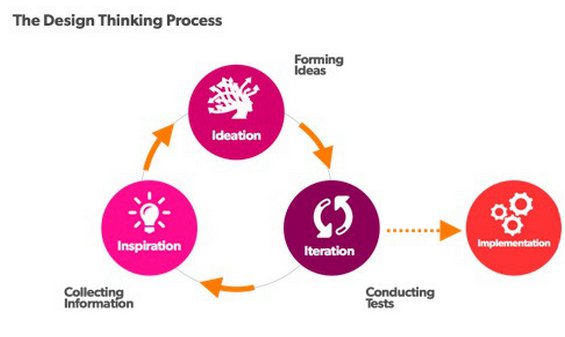
From Andrew Ford of Sebel who presented a non-sales pitched presentation on how to effectively manage in an ILE/MLE space, using research and design thinking:

1) IDEO - This really clearly linked up with Sineck's golden circles so it was easy for me to grasp and made sense.
2) That our whole 'scary' concept of ILE actually comes from the work place, it is already quite well tested with a heap of research within places like architectural offices, design and advertising, Google, Yahoo, Spark, Vodafone... we are just taking those ideas and applying them to education, which is about effective rather than efficient education. Most jobs rely on collaborative process, education needs to reflect that more.
From Professor Michael Fullan who is a bit amazing, on everything because he is amazing
3) "Transformation always means disruptive and that is important. You need to exploit the disruption. Be a disruptor."
4) The New reality - social media is ubiquitous, it weaken hierarchies, which opens up lateral solutions, distribution and concentrated connection is the new power. E.g. our COL's are a distribution of power and if they ae working well, it is a new concentration of power. The young are the most connected and the least committed to the status quo. Students are the agents of change when you set it up right cultivate it and leverage it.
5) Discursive practice makes all the difference. Talking the walk into action, talking yourself into clarity with others around to support you - collaborative, creative, encourages critical thinking, develops your character, you have to hear and accept others views, develops citizenship - how you relate back to opposing and supporting views.
From Hekia Parata who is a very gifted presenter and had 10 minutes:
6) First be powerful leaders in your own lives, the opportunity to contribute is much more real and powerful.
From Hammersley Street school in Nelson - collaborative learning
7) Scaffolding has taken the place of try, fail, learn, try, fail, learn, fly
8)The definition of a well organised teacher needs a major shift in a lot of schools. Endless scaffolding and endlessly planned lessons, and structures in a class ultimately become a barrier to authentic learning if there are ever any challenges, student agency, choice or voice
From Rosemary Hipkins - making meaning across learning areas
9) I see, I think, I wonder - brilliant starter exercise to help move professionals into more of a growth mindset about project based learning. It was cool!
From Haeata Community Campus Senior Leadership Team on transforming leaership and school systems
10) Thats the way we've always done it #ttwwadi
Ncea and ero become excuses not to move forward. If its not broke… but ask why you cant do that because of NCEA, question it and find out why. Interrogate the why all the time.
It was substantially bigger than GAFE (I think) and they feed you very, very well. 1800 teachers attended this year and my first observation was of observing the local College students obligingly and efficiently organise the registrations of those 1800 teachers who are a) not good at following basic instructions and b) are crammed into a seemingly small foyer, with coffee nearby, not able to get to it til the registration was done at 8 in the morning...The students were awesome and moving through the teachers more quickly than the front desk.
My key takeaways would be too many for one post. I am distilling it down to my top 10
From Andrew Ford of Sebel who presented a non-sales pitched presentation on how to effectively manage in an ILE/MLE space, using research and design thinking:
1) IDEO - This really clearly linked up with Sineck's golden circles so it was easy for me to grasp and made sense.
2) That our whole 'scary' concept of ILE actually comes from the work place, it is already quite well tested with a heap of research within places like architectural offices, design and advertising, Google, Yahoo, Spark, Vodafone... we are just taking those ideas and applying them to education, which is about effective rather than efficient education. Most jobs rely on collaborative process, education needs to reflect that more.
From Professor Michael Fullan who is a bit amazing, on everything because he is amazing
3) "Transformation always means disruptive and that is important. You need to exploit the disruption. Be a disruptor."
4) The New reality - social media is ubiquitous, it weaken hierarchies, which opens up lateral solutions, distribution and concentrated connection is the new power. E.g. our COL's are a distribution of power and if they ae working well, it is a new concentration of power. The young are the most connected and the least committed to the status quo. Students are the agents of change when you set it up right cultivate it and leverage it.
5) Discursive practice makes all the difference. Talking the walk into action, talking yourself into clarity with others around to support you - collaborative, creative, encourages critical thinking, develops your character, you have to hear and accept others views, develops citizenship - how you relate back to opposing and supporting views.
From Hekia Parata who is a very gifted presenter and had 10 minutes:
6) First be powerful leaders in your own lives, the opportunity to contribute is much more real and powerful.
From Hammersley Street school in Nelson - collaborative learning
7) Scaffolding has taken the place of try, fail, learn, try, fail, learn, fly
8)The definition of a well organised teacher needs a major shift in a lot of schools. Endless scaffolding and endlessly planned lessons, and structures in a class ultimately become a barrier to authentic learning if there are ever any challenges, student agency, choice or voice
From Rosemary Hipkins - making meaning across learning areas
9) I see, I think, I wonder - brilliant starter exercise to help move professionals into more of a growth mindset about project based learning. It was cool!
From Haeata Community Campus Senior Leadership Team on transforming leaership and school systems
10) Thats the way we've always done it #ttwwadi
Ncea and ero become excuses not to move forward. If its not broke… but ask why you cant do that because of NCEA, question it and find out why. Interrogate the why all the time.
ULEARN 2016
Thank you Spark and MIT for this opportunity.
notes accompanying the slides:
Slide 1 - Tēnā Koutou Katoa Ko Kaiterau tōku Māunga Ko Waikōau tōku awa No Kaikoura ahau Ko Annette rāua ko Paul Bourke ōku mātua Ko Rowena Clemence tōku ingoa
Slide 2 - He Kaiako Te Huruhuru Ao o Horomaka Nō reira, tēnā koutou, tēnā koutou, tēnā koutou katoa. Welcome to my presentation as a Visual Arts teacher at Hornby High School in Christchurch.
Slide 3 - We have new tools requiring new pedagogy that allows learning to happen ubiquitously, rewindably. Teachers dream of facilitating learning rather than ramming knowledge down throats to be regurgitated later. We have an opportunity for self-efficacy.
Slide 4 - ‘Why’? Woolf Fisher data from 2016 highlights the problem we knew we already had with writing. 72% of our new entrants into year 7 are below or well below the national standards in writing. The problem is not the ‘dumbness’ of our kids, as they are not.
Slide 5 - It is the skill-set to break up language and reapply it. People with good writing skills are generally seen as more credible. Are our students equitably empowered when they are constantly playing catch-up with national standards in writing?
Slide 6 - There are no ministry exemplars in Art for the junior levels. Art teachers apparently ‘just know’. Equal emphasis and weighting is on all four strands. Two of these strands require written/vocabulary based understanding.
Slide 7 - So I’m look at Writing. Understanding key words so they can use them effectively. Compare their work to what they understand of the curriculum, assess, plan their next steps. How do we manage this ubiquitously? And in a way that supports learning beyond Art?
Slide 8 - If the students have the words, they control their learning. When they don’t have the words, it’s easier to talk one on one and watch you understand (there is a certain amount of reading your reactions going on) natural intuition and intelligence.
Slide 9 - Every child I surveyed returned a low self-rating of curriculum level. Most children surveyed demonstrated they didn’t understand that visual Arts had curriculum levels. We are doing everything as a school to address this stuff.
Slide 10 - So much we get confused, and it all comes from the one place of wanting to do our very best for our students, to undo the deficit theorising, social expectations, social issues that affect their daily lives.
Slide 11 - I had to move from how I have always done stuff to making it ubiquitously accessible. SAMR is clear measure for me to assess my own teaching methods against. This was not an overnight success. It was a gradual realisation based on the pedagogy driving it.
Slide 12 - I tried this. Over-complicated, too many words, I am an experienced teacher, but I still do not know much about teaching at year 7 and 8. Clearly. I had a whole class complete these and basically i told them the answers as they went.
Slide 13 - These are matching exercises. I broke those strands into keywords for level 3 of the NZC. Then it became obvious that I could use it more than just as a substitute for flash cards. A bank of learning cards could be created. With work on them.
Slide 14 - We have recently started to refer to these as ‘delete it’ exercises. In modifying the task, google draw was a pretty simple tool. I picked a year 7/8 class that I was only getting once a week, choosing to focus on understanding over doing.
Slide 15 - I figured I may as well see if I could extend their literacy over their practical skills in the time I had. Initially we used smart share on Hapara to send these out and a whiteboard to organise who had done what...but the whiteboard was always erased next time, and it was messy.
Slide 16 - More modification was required Drives were cluttered and students were not yet working on wholistic blogs. Hapara WORKSPACE allows for a cleaner interface and embeddable in the google site for Art. It changes this into something much more ubiquitous too.
Slide 17 - I can grade it and send the students feedback. Students who have arrived late to the class can be included in all prior learning. I can see when a student misunderstands their work, they can save their work as jpegs and upload them to their now functioning blogs.
Slide 18 - Beyond this, what is good and not so good, at each level? Using google sheets, I have made self-assessment sheets; rather than students guessing what ‘good’ looks like. I ‘know’ what it looks like without much ministry guidance, but still it needs to be carefully quantified.
Slide 19 - This is shared with all the students in their class. They can only edit their named row. Each row is locked down to only that student. They can see each other’s assessments for their work, but they cannot change it. It is coded to achieved, merit, excellence.
Slide 20 - So what can my students do now that they couldn’t do before? The students in this particular class can explain there are 4 strands, that they feel they are within level 3 because they can see it. An autistic boy does his work at home away from class, and that is fine. I can see it.
Slide 21 - This is where I want to take this next. In doing this, I will be working alongside our local primary school and another, to determine how Visual Arts is handled within a teaching programme, at the same time using this as an opportunity to refine project based learning skills for my own use.
Christina Fortes, just for you.
notes accompanying the slides:
Slide 1 - Tēnā Koutou Katoa Ko Kaiterau tōku Māunga Ko Waikōau tōku awa No Kaikoura ahau Ko Annette rāua ko Paul Bourke ōku mātua Ko Rowena Clemence tōku ingoa
Slide 2 - He Kaiako Te Huruhuru Ao o Horomaka Nō reira, tēnā koutou, tēnā koutou, tēnā koutou katoa. Welcome to my presentation as a Visual Arts teacher at Hornby High School in Christchurch.
Slide 3 - We have new tools requiring new pedagogy that allows learning to happen ubiquitously, rewindably. Teachers dream of facilitating learning rather than ramming knowledge down throats to be regurgitated later. We have an opportunity for self-efficacy.
Slide 4 - ‘Why’? Woolf Fisher data from 2016 highlights the problem we knew we already had with writing. 72% of our new entrants into year 7 are below or well below the national standards in writing. The problem is not the ‘dumbness’ of our kids, as they are not.
Slide 5 - It is the skill-set to break up language and reapply it. People with good writing skills are generally seen as more credible. Are our students equitably empowered when they are constantly playing catch-up with national standards in writing?
Slide 6 - There are no ministry exemplars in Art for the junior levels. Art teachers apparently ‘just know’. Equal emphasis and weighting is on all four strands. Two of these strands require written/vocabulary based understanding.
Slide 7 - So I’m look at Writing. Understanding key words so they can use them effectively. Compare their work to what they understand of the curriculum, assess, plan their next steps. How do we manage this ubiquitously? And in a way that supports learning beyond Art?
Slide 8 - If the students have the words, they control their learning. When they don’t have the words, it’s easier to talk one on one and watch you understand (there is a certain amount of reading your reactions going on) natural intuition and intelligence.
Slide 9 - Every child I surveyed returned a low self-rating of curriculum level. Most children surveyed demonstrated they didn’t understand that visual Arts had curriculum levels. We are doing everything as a school to address this stuff.
Slide 10 - So much we get confused, and it all comes from the one place of wanting to do our very best for our students, to undo the deficit theorising, social expectations, social issues that affect their daily lives.
Slide 11 - I had to move from how I have always done stuff to making it ubiquitously accessible. SAMR is clear measure for me to assess my own teaching methods against. This was not an overnight success. It was a gradual realisation based on the pedagogy driving it.
Slide 12 - I tried this. Over-complicated, too many words, I am an experienced teacher, but I still do not know much about teaching at year 7 and 8. Clearly. I had a whole class complete these and basically i told them the answers as they went.
Slide 13 - These are matching exercises. I broke those strands into keywords for level 3 of the NZC. Then it became obvious that I could use it more than just as a substitute for flash cards. A bank of learning cards could be created. With work on them.
Slide 14 - We have recently started to refer to these as ‘delete it’ exercises. In modifying the task, google draw was a pretty simple tool. I picked a year 7/8 class that I was only getting once a week, choosing to focus on understanding over doing.
Slide 15 - I figured I may as well see if I could extend their literacy over their practical skills in the time I had. Initially we used smart share on Hapara to send these out and a whiteboard to organise who had done what...but the whiteboard was always erased next time, and it was messy.
Slide 16 - More modification was required Drives were cluttered and students were not yet working on wholistic blogs. Hapara WORKSPACE allows for a cleaner interface and embeddable in the google site for Art. It changes this into something much more ubiquitous too.
Slide 17 - I can grade it and send the students feedback. Students who have arrived late to the class can be included in all prior learning. I can see when a student misunderstands their work, they can save their work as jpegs and upload them to their now functioning blogs.
Slide 18 - Beyond this, what is good and not so good, at each level? Using google sheets, I have made self-assessment sheets; rather than students guessing what ‘good’ looks like. I ‘know’ what it looks like without much ministry guidance, but still it needs to be carefully quantified.
Slide 19 - This is shared with all the students in their class. They can only edit their named row. Each row is locked down to only that student. They can see each other’s assessments for their work, but they cannot change it. It is coded to achieved, merit, excellence.
Slide 20 - So what can my students do now that they couldn’t do before? The students in this particular class can explain there are 4 strands, that they feel they are within level 3 because they can see it. An autistic boy does his work at home away from class, and that is fine. I can see it.
Slide 21 - This is where I want to take this next. In doing this, I will be working alongside our local primary school and another, to determine how Visual Arts is handled within a teaching programme, at the same time using this as an opportunity to refine project based learning skills for my own use.
Christina Fortes, just for you.
Tuesday, 6 September 2016
Genius Hour
Collaboration in PLD at work. Shared google doc with notes a few staff took simultaneously during our PD with Caroline From Christ's College on how she runs Genius Hour. Awesome session;
Contributions from:
Joanne Clark
Ben Carter
Sarah Richardson
Rowena Clemence
Contributions from:
Joanne Clark
Ben Carter
Sarah Richardson
Rowena Clemence
Friday, 19 August 2016
Trouble Shooting
7BK - my main class for trialling SPARK - MIT initiatives are just lovely. They tolerate and buy into me trying new things out on a very regular basis. AND they tell me they love Art. What more can I hope for :-)
Going week to week, sending out mass copies of google drawings to be completed by the class is messy and confusing. Particularly when we are enrolling new students all the time who are not necessarily added to your Hapara class lists...
I lost my phone again. And my keys (not new). And my head doing this. I had messed around in workspace and then decided not to use it. Now it can be made public and now that I am steadily confusing myself with what is sent and what is not, I have come to the realisation, it is the cleanest and most effective way to get their literacy work out to the class.
Their Hapara drive looked like this:
Which was my fault....
We were all confused and only got about 20 minutes of practical art work done in a lesson...that is not fun. I persisted with this for a while before I decided I was making my life worse.
WORKSPACE - I think has saved my life

How tidy is this? I can set up the do nows as 'evidence' it is public and I am about to link it to my site so that they can enter through there too.
Life is better.
Going week to week, sending out mass copies of google drawings to be completed by the class is messy and confusing. Particularly when we are enrolling new students all the time who are not necessarily added to your Hapara class lists...
I lost my phone again. And my keys (not new). And my head doing this. I had messed around in workspace and then decided not to use it. Now it can be made public and now that I am steadily confusing myself with what is sent and what is not, I have come to the realisation, it is the cleanest and most effective way to get their literacy work out to the class.
Their Hapara drive looked like this:
Which was my fault....We were all confused and only got about 20 minutes of practical art work done in a lesson...that is not fun. I persisted with this for a while before I decided I was making my life worse.
WORKSPACE - I think has saved my life

How tidy is this? I can set up the do nows as 'evidence' it is public and I am about to link it to my site so that they can enter through there too.
Life is better.
Tuesday, 9 August 2016
Hornby High School Kapahaka
"It's just an excuse to get out of class..."
Not a student, but a former teacher. The prospect of students coming out of a timetabled class for Kapahaka practice.
"I don't think it is fair that they miss one of our classes and we lose that time, they are usually the most behind"
It is not the most accurate quote, but it is a sentiment expressed often when, as a dean a few years ago, I was the space between the rock and the hard place in soothing fears and hurts over the school attempting to get some traction in setting up Kapahaka as a culture here. Unsuccessfully, I might add. In both respects.
The key word here being 'they'. Us and them, you and me, management vs school vs students vs Māori students. When fear is a factor, the 'other' becomes a significant stumbling block, ignorance outweighs compassion and common sense. All we end up seeing and being, is a part of a divisive and negative culture.
So I joined the Kapahaka practice. It is the most surreal thing to watch students who in the grounds, and in some classes, are at times sorta, kinda wicked hard work, not always particularly open to you as a teacher, be the star of the show. Take control Ms Tongotongo and direct your senior girls to stand with, and help teach the new girls (and women teachers), dictate the volume output with your command and your own voice, amp it up, control the 'pause', teach 15 new students the first section of the school haka in 7 minutes, thank you very much.
Back inside the auditorium we all go, back with the boys, standing together. A male and a female lead again control the volume, determine the pace, and within 15 minutes we all know those first few lines well and the roof is being raised off, like a lid of a soda bottle shaken up by the pressure of our voices. We went from 40% to 110% input in stages, as directed and maintained by our student leaders.
There are benefits to all staff being in this room at this moment. We see confidence where we didn't know it existed, a sense of togetherness demonstrated by the students, the collective consciousness as a real thing. Manaakitanga, Kawanatanga even, there as real tangible elements. Taking this and translating it into the classroom means more than just being there at the practice as a teacher. I want to explore this more, I'm hoping that some of what we do is already doing this. At the end of the year, I want to compare how my new senior class structure compares to this style of education and whether results have in fact been affected, or even whether I care about those results or something more.
Not a student, but a former teacher. The prospect of students coming out of a timetabled class for Kapahaka practice.
"I don't think it is fair that they miss one of our classes and we lose that time, they are usually the most behind"
It is not the most accurate quote, but it is a sentiment expressed often when, as a dean a few years ago, I was the space between the rock and the hard place in soothing fears and hurts over the school attempting to get some traction in setting up Kapahaka as a culture here. Unsuccessfully, I might add. In both respects.
The key word here being 'they'. Us and them, you and me, management vs school vs students vs Māori students. When fear is a factor, the 'other' becomes a significant stumbling block, ignorance outweighs compassion and common sense. All we end up seeing and being, is a part of a divisive and negative culture.
So I joined the Kapahaka practice. It is the most surreal thing to watch students who in the grounds, and in some classes, are at times sorta, kinda wicked hard work, not always particularly open to you as a teacher, be the star of the show. Take control Ms Tongotongo and direct your senior girls to stand with, and help teach the new girls (and women teachers), dictate the volume output with your command and your own voice, amp it up, control the 'pause', teach 15 new students the first section of the school haka in 7 minutes, thank you very much.
Back inside the auditorium we all go, back with the boys, standing together. A male and a female lead again control the volume, determine the pace, and within 15 minutes we all know those first few lines well and the roof is being raised off, like a lid of a soda bottle shaken up by the pressure of our voices. We went from 40% to 110% input in stages, as directed and maintained by our student leaders.
There are benefits to all staff being in this room at this moment. We see confidence where we didn't know it existed, a sense of togetherness demonstrated by the students, the collective consciousness as a real thing. Manaakitanga, Kawanatanga even, there as real tangible elements. Taking this and translating it into the classroom means more than just being there at the practice as a teacher. I want to explore this more, I'm hoping that some of what we do is already doing this. At the end of the year, I want to compare how my new senior class structure compares to this style of education and whether results have in fact been affected, or even whether I care about those results or something more.
Sunday, 7 August 2016
Random Thoughts
As I hung the washing on a freezing Canterbury morning (-4), I couldn't help thinking of further steps:
- How to see this through a te reo lens - we have a bi-lingual unit, there is a minimal requirement for how that is handled in te reo. I know that my having they year 7 and 8 bi-lingual class once a week helps diminish the time spent doing this.
- Dropping back further to level 2 of the visual arts curriculum - knowing how this is already handled at a primary school level would be beneficial, particularly a collaborative environment.
- Not forgetting how SOLO fits in.
- How to see this through a te reo lens - we have a bi-lingual unit, there is a minimal requirement for how that is handled in te reo. I know that my having they year 7 and 8 bi-lingual class once a week helps diminish the time spent doing this.
- Dropping back further to level 2 of the visual arts curriculum - knowing how this is already handled at a primary school level would be beneficial, particularly a collaborative environment.
- Not forgetting how SOLO fits in.
Subscribe to:
Posts (Atom)
