Saturday, 29 April 2017

New Google sites

First look, loved them. Second and third look did NOT love them. Up to my fourth look and genuine attempt at dealing with them and I am back to loving them.

Things to remember about Google sites in the new format:

- You have to expect things to work differently and for you to be adaptable to those differences.

  • I spent quite a bit of time making myself recreate our Art site in the new version, and in the process sending google endless feedback about what annoyed me so far. Then as I went, I realised my own mindset was just a bit stuck. I used to use tables and then alter the html code to pretty it up, in adding buttons to my site. That is not what I even need to do now, I just didn't see that I didn't need to mess with the code to create a clean look that I wanted. In essence that was all I was after. I still hate that I cannot lock down pages to be private, which was a tool I found extremely useful with the classic sites, but I am becoming more used to just hiding that same content within my drive and keeping it locked down there to who I want to see it. So while the buttons or links might be visible, the content just needs to be within the locked down file. 


- You don't need to have an IT degree to manage aspects of it like old sites. It is actually just click and drag.

- You should definitely have a plan of how your page 'tree' works. I was able to develop this more organically with classic sites, though every now and then i did disconnect the wrong pages and reconnect others I was meant to leave.

- You can only go one page deep into sub-pages.

- I cannot embed padlets into it. Maybe because they aren't a google owned tool?

- It will continue to improve. Google continues to develop these things, so it will do more eventually. May as well catch the train when it's not moving so fast, then have to catch up to it at full speed.


Click on the pic for the site so far... Aiming to be ready to go at the end of term two.

Signing up to this forum is a way of understanding the differences, imitations and keeping up to date with changes google makes to their new product.


Developing Scholarship as our new normal.

I keep threatening this idea that all of our senior students will complete scholarship pages as normal practice. The reality of making sense of this exam in Visual Arts is in fact, exhausting. At least I found it so.

For the second time in the time I have been at Hornby High School, we had a student submit a scholarship work book for painting. The work was beautiful, but the pages were regenerated based on work she had done to fit the exam. So she entered it blind.

The focus was on her completing the folio with an excellence (you cannot be considered for scholarship unless you first attain excellence in the field you are submitting for). And she did that. But missed out on the scholarship. The most beautiful Excellence board I have seen though maybe I am biased, as she was also one of the most beautiful people to know as well. 


Why are we doing this?

Three good reasons why;

1) If it is normal, it is achievable. High expectations allow for higher achievement, you get what you expect and that is in line with Carol C. Dweck's mindset theories too
2) Again being fed up with the idea that we can't because of the stigma of being in the wrong area of a not that big city anyway... my blood boils over that one. 
3) The tools we have with GaFE and digital learning, the support of Manaiakalani in developing resources, lends us to be able to support learners to achieve this exam with more surety. So why on earth wouldn't we? If we were encouraged to have low expectations of our learners and ourselves, I suppose we may not... that is to to be our pathway though. 

So the development of such a plan for our learners here begins. 


Steps in the process:

- Reaching out to other schools who already offer a scholarship programme without offering a scholarship class (I feel that defeats the whole purpose of what a scholarship is, though I do understand that many schools see this as a highly competitive thing that adds a special kudos to their wider community)
- Breaking down Scholarship into meaningful chunks of understanding and clearly relating them to how our students learn throughout the year, so they can be completed in real time alongside real work.
- Making sure all resources and supports are ubiquitous and accessible online
- Using SAMR appropriately to support online development. 

Now onto do the work. 

I'm starting with moving our site into the new google sites platform, within that, it may well just be easier to develop scholarship resources, as we are starting afresh somewhat. As e-learning is a role I already have, making the switch to the new platform is in my best interests.

Wednesday, 1 March 2017

2017 Inquiry


Our Inquiry for Visual Arts this year is a joint one, focussing on how best to spread the load of specialty skills across as many senior students as possible.

Can Teacher Collaboration Improve Student Achievement in Senior Art Classes?

Our progress so far has been to set up the google sheets to track at least the first 6 weeks of each class in the senior school for Art. I would expect these to develop and grow based on how we use them.

There is the intention that these are used to make sure no student is left behind in being given feedback and kept up to speed.

We have also organised to split up the line 3 and 4 classes and share the teaching across those lines. We do have differing styles and expectations so it may take a little time to adjust to this. however, if students are truly working to their own goals and are there for the right reasons, this should come together.

At this point in time we have one over subscribed class of 37, one of 33, one of 13 and one of 22. Because we chose to mix our levels, there was a lack of communication between the three levels in general about numbers, so this is an issue that needs clarifying.

By the end of 2017, I want to be able to say we gave every senior student the best possible chance with teacher expertise available to direct their own learning. I want every student to be able to direct their own learning, rather than lean on the teacher or dismiss their own chances because the right teacher is not there.


Friday, 23 December 2016

Wednesday, 12 October 2016

ULEARN 2016 - 5 - 7 October; What I Gained

ULEARN is pretty massive. I had never been, and only had the GAFE summit held in Christchurch to compare it to. The reason I got to go was because of Spark - MIT 2016. Again thanks so much for that opportunity.

It was substantially bigger than GAFE (I think) and they feed you very, very well. 1800 teachers attended this year and my first observation was of observing the local College students obligingly and efficiently organise the registrations of those 1800 teachers who are a) not good at following basic instructions and b) are crammed into a seemingly small foyer, with coffee nearby, not able to get to it til the registration was done at 8 in the morning...The students were awesome and moving through the teachers more quickly than the front desk. 

My key takeaways would be too many for one post. I am distilling it down to my top 10

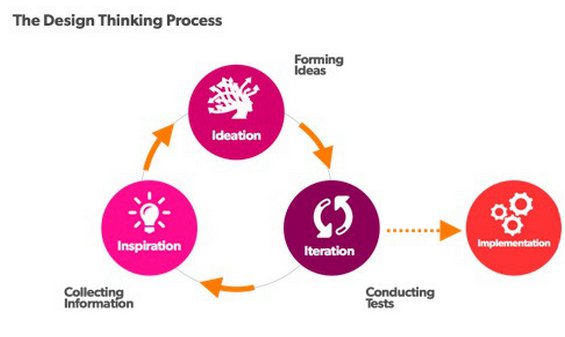
From Andrew Ford of Sebel who presented a non-sales pitched presentation on how to effectively manage in an ILE/MLE space, using research and design thinking:


1) IDEO - This really clearly linked up with Sineck's golden circles so it was easy for me to grasp and made sense.

2) That our whole 'scary' concept of ILE actually comes from the work place, it is already quite well tested with a heap of research within places like architectural offices, design and advertising, Google, Yahoo, Spark, Vodafone... we are just taking those ideas and applying them to education, which is about effective rather than efficient education. Most jobs rely on collaborative process, education needs to reflect that more.

From Professor Michael Fullan who is a bit amazing, on everything because he is amazing
3) "Transformation always means disruptive and that is important. You need to exploit the disruption. Be a disruptor."

4) The New reality - social media is ubiquitous, it weaken hierarchies, which opens up lateral solutions, distribution and concentrated connection is the new power. E.g. our COL's are a distribution of power and if they ae working well, it is a new concentration of power. The young are the most connected and the least committed to the status quo. Students are the agents of change when you set it up right cultivate it and leverage it.

5) Discursive practice makes all the difference. Talking the walk into action, talking yourself into clarity with others around to support you - collaborative, creative, encourages critical thinking, develops your character, you have to hear and accept others views, develops citizenship - how you relate back to opposing and supporting views.

From Hekia Parata who is a very gifted presenter and had 10 minutes:
6) First be powerful leaders in your own lives, the opportunity to contribute is much more real and powerful.

From Hammersley Street school in Nelson - collaborative learning
7) Scaffolding has taken the place of try, fail, learn, try, fail, learn, fly

8)The definition of a well organised teacher needs a major shift in a lot of schools. Endless scaffolding and endlessly planned lessons, and structures in a class ultimately become a barrier to authentic learning if there are ever any challenges, student agency, choice or voice

From Rosemary Hipkins - making meaning across learning areas
9) I see, I think, I wonder - brilliant starter exercise to help move professionals into more of a growth mindset about project based learning. It was cool!

From Haeata Community Campus Senior Leadership Team on transforming leaership and school systems
10) Thats the way we've always done it #ttwwadi
Ncea and ero become excuses not to move forward. If its not broke… but ask why you cant do that because of NCEA, question it and find out why. Interrogate the why all the time.

ULEARN 2016

Thank you Spark and MIT for this opportunity.


 notes accompanying the slides:

Slide 1 - Tēnā Koutou Katoa Ko Kaiterau tōku Māunga Ko Waikōau tōku awa No Kaikoura ahau Ko Annette rāua ko Paul Bourke ōku mātua Ko Rowena Clemence tōku ingoa

Slide 2 - He Kaiako Te Huruhuru Ao o Horomaka Nō reira, tēnā koutou, tēnā koutou, tēnā koutou katoa. Welcome to my presentation as a Visual Arts teacher at Hornby High School in Christchurch. 

Slide 3 - We have new tools requiring new pedagogy that allows learning to happen ubiquitously, rewindably. Teachers dream of facilitating learning rather than ramming knowledge down throats to be regurgitated later. We have an opportunity for self-efficacy.

Slide 4 - ‘Why’? Woolf Fisher data from 2016 highlights the problem we knew we already had with writing. 72% of our new entrants into year 7 are below or well below the national standards in writing. The problem is not the ‘dumbness’ of our kids, as they are not.

Slide 5 - It is the skill-set to break up language and reapply it. People with good writing skills are generally seen as more credible. Are our students equitably empowered when they are constantly playing catch-up with national standards in writing?

Slide 6 - There are no ministry exemplars in Art for the junior levels. Art teachers apparently ‘just know’. Equal emphasis and weighting is on all four strands. Two of these strands require written/vocabulary based understanding.

Slide 7 - So I’m look at Writing. Understanding key words so they can use them effectively. Compare their work to what they understand of the curriculum, assess, plan their next steps. How do we manage this ubiquitously? And in a way that supports learning beyond Art?

Slide 8 - If the students have the words, they control their learning. When they don’t have the words, it’s easier to talk one on one and watch you understand (there is a certain amount of reading your reactions going on) natural intuition and intelligence.

Slide 9 - Every child I surveyed returned a low self-rating of curriculum level. Most children surveyed demonstrated they didn’t understand that visual Arts had curriculum levels. We are doing everything as a school to address this stuff.

Slide 10 - So much we get confused, and it all comes from the one place of wanting to do our very best for our students, to undo the deficit theorising, social expectations, social issues that affect their daily lives.

Slide 11 - I had to move from how I have always done stuff to making it ubiquitously accessible. SAMR is clear measure for me to assess my own teaching methods against. This was not an overnight success. It was a gradual realisation based on the pedagogy driving it.

Slide 12 - I tried this. Over-complicated, too many words, I am an experienced teacher, but I still do not know much about teaching at year 7 and 8. Clearly. I had a whole class complete these and basically i told them the answers as they went.

Slide 13 - These are matching exercises. I broke those strands into keywords for level 3 of the NZC. Then it became obvious that I could use it more than just as a substitute for flash cards. A bank of learning cards could be created. With work on them.

Slide 14 - We have recently started to refer to these as ‘delete it’ exercises. In modifying the task, google draw was a pretty simple tool. I picked a year 7/8 class that I was only getting once a week, choosing to focus on understanding over doing.

Slide 15 - I figured I may as well see if I could extend their literacy over their practical skills in the time I had. Initially we used smart share on Hapara to send these out and a whiteboard to organise who had done what...but the whiteboard was always erased next time, and it was messy.

Slide 16 - More modification was required Drives were cluttered and students were not yet working on wholistic blogs. Hapara WORKSPACE allows for a cleaner interface and embeddable in the google site for Art. It changes this into something much more ubiquitous too.

Slide 17 - I can grade it and send the students feedback. Students who have arrived late to the class can be included in all prior learning. I can see when a student misunderstands their work, they can save their work as jpegs and upload them to their now functioning blogs.

Slide 18 - Beyond this, what is good and not so good, at each level? Using google sheets, I have made self-assessment sheets; rather than students guessing what ‘good’ looks like. I ‘know’ what it looks like without much ministry guidance, but still it needs to be carefully quantified.

Slide 19 - This is shared with all the students in their class. They can only edit their named row. Each row is locked down to only that student. They can see each other’s assessments for their work, but they cannot change it. It is coded to achieved, merit, excellence.

Slide 20 - So what can my students do now that they couldn’t do before? The students in this particular class can explain there are 4 strands, that they feel they are within level 3 because they can see it. An autistic boy does his work at home away from class, and that is fine. I can see it.

Slide 21 - This is where I want to take this next. In doing this, I will be working alongside our local primary school and another, to determine how Visual Arts is handled within a teaching programme, at the same time using this as an opportunity to refine project based learning skills for my own use.

 Christina Fortes, just for you.

Tuesday, 6 September 2016

Genius Hour

Collaboration in PLD at work. Shared google doc with notes a few staff took simultaneously during our PD with Caroline From Christ's College on how she runs Genius Hour. Awesome session;
Contributions from:
Joanne Clark
Ben Carter
Sarah Richardson
Rowena Clemence